Decision Fatigue
Under sustained stress, the quality and speed of decision-making may change. Routine choices can feel more demanding than usual.
An analytical look at how stress may influence the way people interact, make decisions, and navigate daily routines.
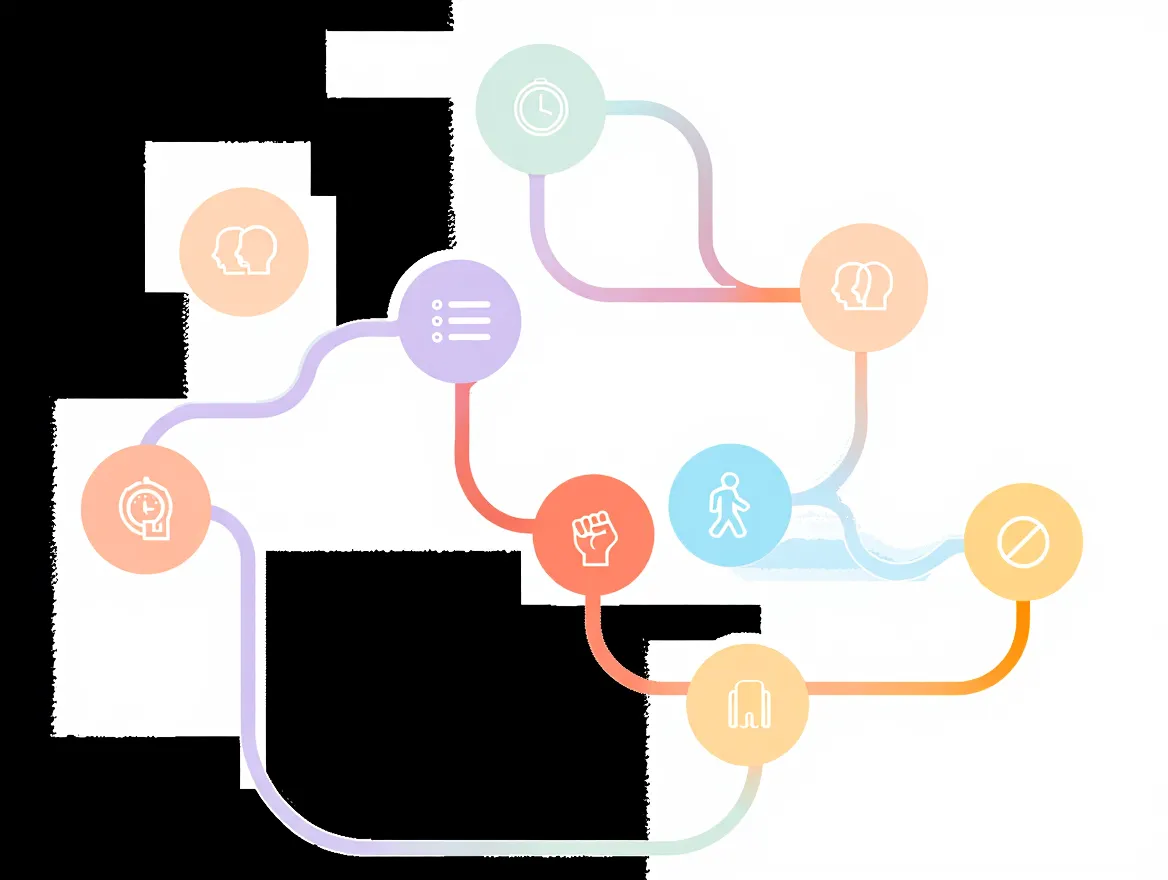
Research in behavioral science suggests that stress can influence how people process information, respond to challenges, and engage with their environment. These effects are typically subtle and gradual.
Understanding these patterns is not about labeling behavior but about building awareness of how internal states may shape external actions over time.
Cognitive patterns may shift under stress. These are general observations from behavioral research.
Under sustained stress, the quality and speed of decision-making may change. Routine choices can feel more demanding than usual.
Stress may cause focus to narrow, making it harder to see the broader context of situations or consider multiple perspectives.
Elevated stress is sometimes associated with reduced mental flexibility, making it harder to adapt to new information or changes.
Interpersonal dynamics may be affected when stress levels are elevated over time.
Under stress, communication styles may become more direct, less patient, or more prone to misunderstanding.
Stress can influence how people relate to colleagues, friends, and family, sometimes creating distance or friction.
People under stress may struggle with setting or maintaining boundaries, leading to overcommitment or avoidance.
When personal resources are depleted, the capacity for empathic engagement may temporarily decrease.
Simple observation practices can help identify how stress may be influencing your behavior.
Creating a brief space between a stressful stimulus and your response can reveal automatic patterns that might otherwise go unnoticed.
At the end of the day, briefly reflecting on how conversations and interactions felt can highlight stress-related behavioral shifts.
Avoiding certain tasks or interactions repeatedly may signal underlying tension that benefits from conscious acknowledgment.
If you would like to share feedback or ask a question, feel free to reach out.
Contact Us